
“Dragonfly: Flights of Exploration on an Exotic Ocean World”
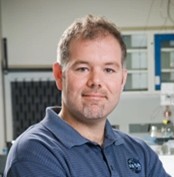
Dr. Daniel Gavin, Project Scientist for OSIRIS-REx
NASA Goddard
“NASA’s OSIRIS-REx Mission: Laboratory Results from
Pristine Samples of Asteroid Bennu”
GRAA NEWSLETTER
P.O. Box 1184, Greenbelt, MD 20768-1184
| November 2025 | https://GoddardRetirees.org | 41th Year of Publication |
UPCOMING LUNCHEONS: We will meet at 11:15 AM on November 4th at the American Legion Post #136 at 6900 Greenbelt Road. Reservations are required; please contact graalunch@gmail.com (preferred) or call 410-709-8889 before Thursday, October 30th.
| November 4 |
|
Dr. Melissa Trainer, Deputy PI/Dragonfly mission
NASA Goddard “Dragonfly: Flights of Exploration on an Exotic Ocean World” |
| December | No Luncheon — Enjoy your holiday season. | |
| January 13 |
|
Dr. Daniel Gavin, Project Scientist for OSIRIS-REx |
TREASURER’S REPORT: Jackie Gasch received donations from: Alfred Seinold, Bud Booth, Raymond Mazur, Joe Bredekamp and Ellen Herring
WELCOME TO NEW MEMBERS:
We are delighted to welcome the following new members:
Jim Corbo
Sherri Corbo
Kristin Ekanger
Karen Michael
Dung Phan
Bill Sluder
Dave Williams
WHAT’S UP WITH OUR MEMBERS
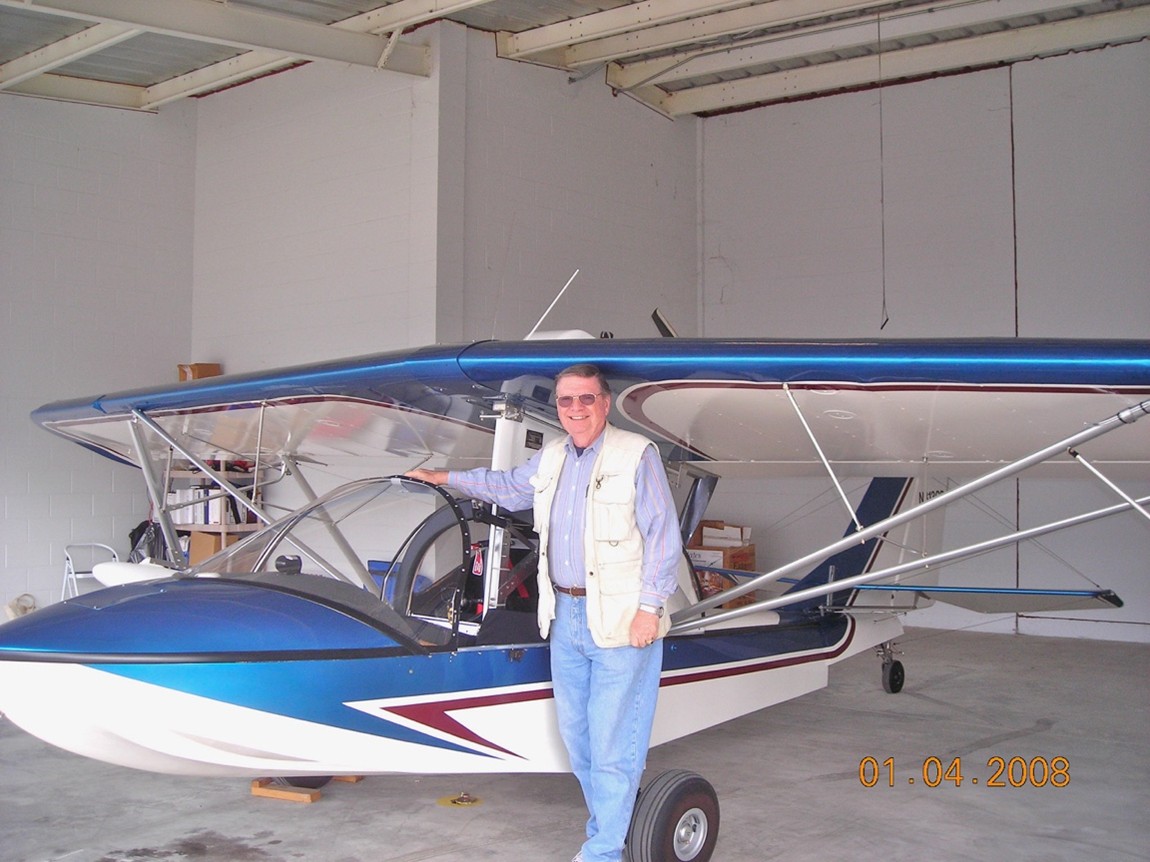
Frank Carr became a “Flying Octogenarian” after flying his homebuilt airplane on his 80th birthday. After joining Goddard right out of college, he stayed with NASA for his entire career, from GSFC to HQ to JPL to consultant, 50 years minus one month. After flying to Oshkosh with Jim Moore and Jim Mason, he was bitten with building an experimental airplane and eventually built and flew extensively his SeaRey in Florida. He is now in SW Florida in Assisted Living. He enjoys reading the GRAA articles and encourages us to keep up the good work.
Your colleagues and friends would enjoy hearing about your life experiences after Goddard before they see your name in our “Remembering Our Former Colleagues” section. News of interest to our members could be professional, volunteer activities, awards and recognition, a personal achievement, or an unusual adventure or hobby. Please feel welcome to send a concise message (<100 words) and a photo to Tony Comberiate (abcomberiate@verizon.net) and Carl Stahle (carl.m.stahle@gmail.com) who reserve the right to edit for content and length.
FROM THE GODDARD ARCHIVES:
On December 2, 1995, an Atlas Centaur launched SOHO, Solar Heliospheric Observatory. It has observed two eleven-year solar cycles and over 5000 comets. One comet plunged towards the sun at nearly 1.3 million miles per hour.
COMMENTS FROM TONY COMBERIATE AND CARL STAHLE
Our October Speaker was Dr. Richard Kelley, the US Principal Investigator for the X-ray Imaging and Spectroscopy Mission (XRISM). His presentation, “How the Goddard Space Flight Center built the coldest spectrometer ever to observe the hottest objects in the Universe” explained the technology and instrument development, the history of the missions, and the science results of XRISM and earlier missions.
The X-Ray microcalorimeter is a sensor that detects X-rays by converting the absorbed energy from an X-ray photon into heat. It must operate at a very low temperature < 1 K using an absorber and thermistors to provide the excellent energy resolution. After an X-ray is absorbed, the heat is conducted away, and the detector returns to equilibrium.
Goddard’s first X-ray microcalorimeter was proposed in 1982 by Harvey Moseley and Richard Mushotzky for X-ray detection. Since the heat capacity of materials is very low, a small amount of energy input can produce a significant temperature change. The Earth's atmosphere absorbs most X-rays, so they are not detectable from Earth-based telescopes. In 1993, the approach to building an X-Ray telescope was split into two directions- Imaging and Spectroscopy. The first imaging X-ray flagship mission was the Advanced X-ray Astrophysics Facility (AXAF), now called the Chandra X-ray Observatory, and was launched in 1999. Chandra was sensitive to X-ray sources 100 times fainter than any previous X-ray telescope which was enabled by the high angular resolution of its mirrors.
Dr. Kelley explained the long journey for the X-Ray Spectroscopy missions, joint projects between JAXA and NASA, that preceded the XRISM mission: ASTRO-E failed on launch in 2000; ASTRO-E2, designed to probe high-energy X-ray sources, such as supernova explosions, black holes, and galactic clusters, launched in 2005, but failed after two weeks due to a series of cooling system malfunctions that caused the spacecraft to shut down; ASTRO-H was launched in 2016, but was lost weeks after launch due to a series of mistakes in mission operations. The XRISM satellite, which successfully launched on September 7, 2023, contains the primary instrument X-ray Spectrometer (Resolve) which is an X-ray microcalorimeter, designed and built at Goddard. Goddard also provided the lowest temperature cryogenic cooling system. A second instrument, Xtend, is an X-ray CCD camera. Both instruments study the soft X-ray energy range, and each has a separate Soft X-ray telescope with a focal length of 5.6 m. The X-ray mirrors and telescope were provided by Goddard.
Rich showed photos of our members who participated in developing the earlier missions that led to XRISM and explained that despite its long history to success, XRISM and the Resolve spectrometer is a pioneering mission. This mission and spectrometer will enable the future of higher resolution x-ray imaging and high spectral resolution to future astronomers including the ATHENA mission in the late 2030s and eventually the LYNX mission in the 2050s.
PRICE INCREASE: Since GRAA moved the monthly lunches from the Goddard Recreation Center to the American Legion in February 2014, we have been able to continue to charge $10.00 for each GRAA member having lunch. Working with the American Legion and realizing that times change and prices go up, beginning with the January 2026 GRAA luncheon, it will now cost each member $12.00 to have lunch at the GRAA monthly luncheon. Please bring $1 dollar bills!
ACTIVITIES FOR MEMBERS:
A volunteering opportunity: The Goddard Visitors Center has a need for someone to cover the Front Desk of the Visitor Center on Friday mornings from 10am to 1pm. They would greet visitors as they arrive, answer the phone, and hand out and then check scavenger hunts. Please contact Amanda Harvey at 301-286-9041 or amanda.c.harvey@nasa.gov.
Pawan Bhartia volunteers as a docent at Smithsonian National Museum of Asian Art, aka Freer/Sackler Galleries. It is located within a short walking distance from Smithsonian metro station. He invites GRAA members to the museum for a special tour of the exhibits. He can design the tour based on your interests. Visit Asia.si.edu for an overview of the galleries. Weekends are best for him. Other days after 2 pm are also okay. Feel welcome to email him at paunb1@icloud.com to schedule a visit.
Jan Kalshoven, one of GRAA’s board members, became the president of what is now called the Goddard Tennis and Pickleball Club (GTPC) this past year. There are no fees to play at the Goddard Tennis complex which now has lines and a rollable net for pickleball (Access to the center is by showing your Goddard retiree badge as you drive in). Courts are open to all, but if you want to join GTPC and get on WhatsApp and TeamReach to find other Goddard players, send an email to .
GRAA is on Social Media
GRAA has extended its reach to social media. We are now on LinkedIn which is the world’s largest professional network. Members can visit linkedin.com and search for NASA Goddard Retirees and Alumni Association. You are welcome to be a follower of this group.
DIRECTORIES AND NEWSLETTERS. Send your email address to goddardretirees@gmail.com to get our monthly Newsletters, which include synopses of the talks, special community announcements, and obituaries. Past Newsletters and links to videos of the talks are on our website https://goddardretirees.org. Multi-month abstracts of Newsletters are mailed to the retirees with only residential addresses in our files. We depend on retirees to furnish their home addresses to be listed in the biennial GRAA Membership Directories, only available as mailed hardcopies to members. These mailings are supported by donations to GRAA, P. O. Box 1184, Greenbelt, MD 20768-1184.
REMEMBERING OUR FORMER COLLEAGUES
Melvin (Skip) Louis Warner, 81, of Tobyhanna, PA, died on June 17, 2025, following a period of declining health. Born in Norwalk, Ohio, he honorably served his country in the United States Navy. After his discharge, his jobs included working at NASA Goddard Space Flight Center where he told everyone he helped get the men on the Moon.